
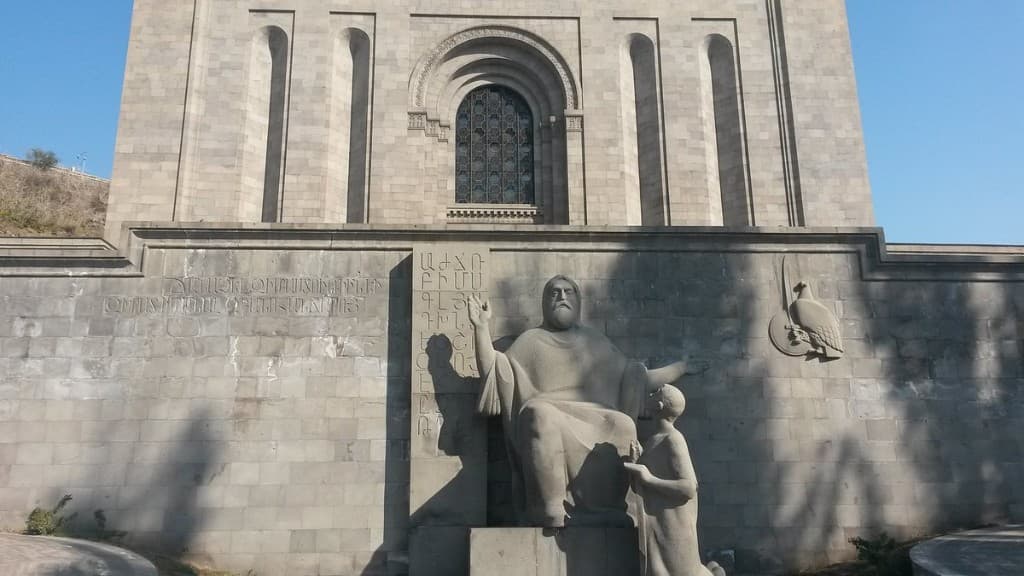
Understanding 1915 requires cultural context: Armenian is not a marginal dialect but an independent Indo-European language with a long written tradition. Scholarship traditionally credits Mesrop Mashtots with the Armenian alphabet in the fifth century, often citing 405 as a symbolic date. That script fixed scripture, hymnody, and scholarly texts under imperial pressure.
Matenadaran: a living archive
Yerevan’s Matenadaran holds thousands of Armenian manuscripts. It is not mere scenery: it is a philology and written-memory laboratory. Diaspora university libraries digitize fragments for research.
UNESCO and letter art
UNESCO has inscribed Armenian letter art as intangible cultural heritage. That underscores how Armenian survival spans more than politics or demography—it includes calligraphic practice, teaching, and ritual.
For readers of this site
If you teach the Armenian Genocide, reserve a module for the alphabet and a sample manuscript page: it humanizes demographic statistics. Link to “About Armenians” and to Matenadaran resources.