
Featured essay
LawIsrael recognizes the Armenian Genocide (2026)
Unanimous Cabinet decision: Israel’s formal recognition of the genocide committed against the Armenian people. Source: Government of Israel (gov.il).
Read moreLong-form essays on memory, law, education, and Armenian life in Spain. Each article is also available in Spanish: Spanish edition.
Featured essay
LawUnanimous Cabinet decision: Israel’s formal recognition of the genocide committed against the Armenian people. Source: Government of Israel (gov.il).
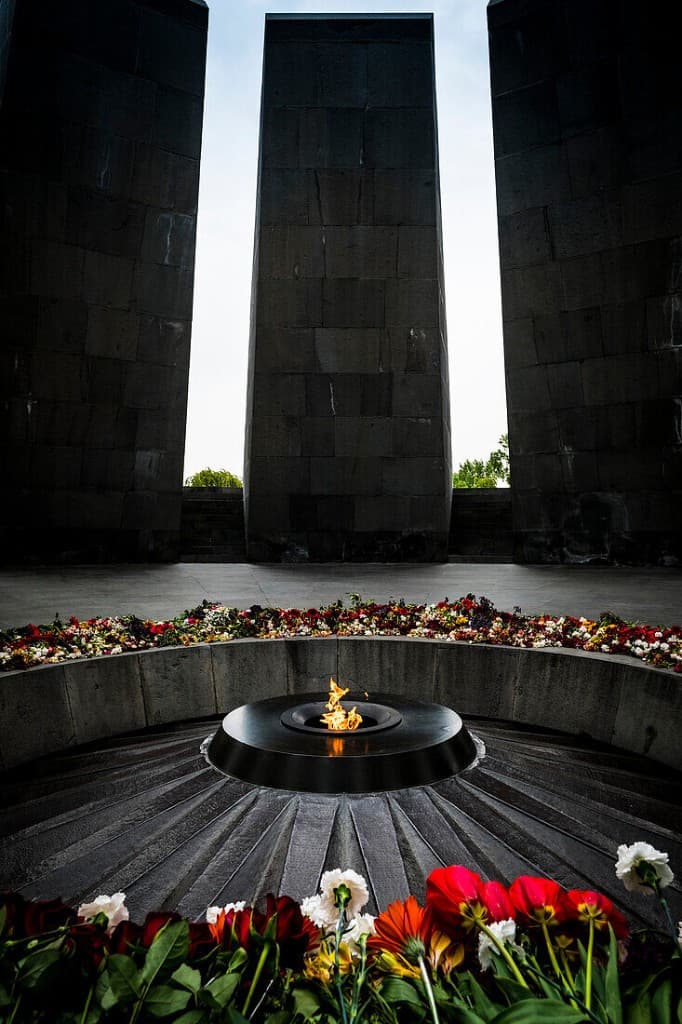
Read moreYerevan, 23 April 2026. Annual torch march to Tsitsernakaberd. Motto: “The struggle continues.” Live video stream available.
Read moreCivic ceremony at Parque de la Batería: manifesto reading, live music, and a floral tribute. Organized with the Torremolinos City Council.
Read moreCommemoration with a floral offering at Hort de Sendra, organized with Asociación Armenia Ararat and Mislata City Council.
Read moreThursday 23 April 2026: film (Ararat) and lecture with Ricardo Ruiz de la Serna. Chair of Armenian Studies, UCM.
Read more23 April 2026, 9:00 p.m. Start at Plaça de Josep Puig i Cadafalch; end at the khachkar (Avinguda de l'Estadi, 60). Organized by ACAB.
Read more24 April 2026, 11:30 a.m., in front of the town hall. Flag ceremony and floral tribute. Associació d'Armènia a Catalunya -Ararat-.
Read moreHow recognition of the Armenian Genocide intersects with Spain’s democratic memory culture—institutions, media, and informed citizenship.
Read moreWhy recognizing a genocide in law differs from criminalizing denial; France’s Constitutional Council and the ECtHR Grand Chamber in Perinçek.
Read moreHow European institutions approach recognition of the Armenian Genocide and why it matters for democratic memory and human rights standards.
Read moreArmenian Apostolic presence in Spain since 2009, community life in multiple cities, and April 24 as a civic remembrance date.
Read morePractical guidance for teaching the Armenian Genocide (1915) in secondary education with accuracy, care, and age-appropriate methods.
Read moreEuropean Parliament resolutions, local statements, and the role of schools against disinformation.
Read moreHow different national memory processes and the Armenian Genocide fit within a shared human-rights framework—without competitive suffering.
Read moreMesrop Mashtots, the Matenadaran, Armenian letter art, and why they matter for identity and cultural survival.
Read moreA concise look at the 2021 U.S. presidential statement and how to read international coverage without conflating foreign policy with historiography.
Read moreWhat Germany’s 2016 Bundestag resolution did, how it differs from criminal statutes, and how to trace reliable reporting in archives.
Read moreA short guide to balancing headlines, Spanish Foreign Ministry messaging, and analysis pieces when 1915 is in the news.
Read moreHow to read statements by senior officials, expert reports, and resolutions—without treating political forums like courts.
Read moreFrom faith groups and associations to culture and citizenship: recurring themes in reporting and how to widen the lens with community sources.
Read more