
1915: memory, justice, and recognition
An educational project on the Armenian Genocide (1915) — one of the first large-scale atrocities of the 20th century, resulting in the destruction of Armenian communities across the Ottoman Empire. This site provides historical context, memory, and the role of recognition in Spain and Europe.
Recognized by more than 30 countries and numerous international institutions.
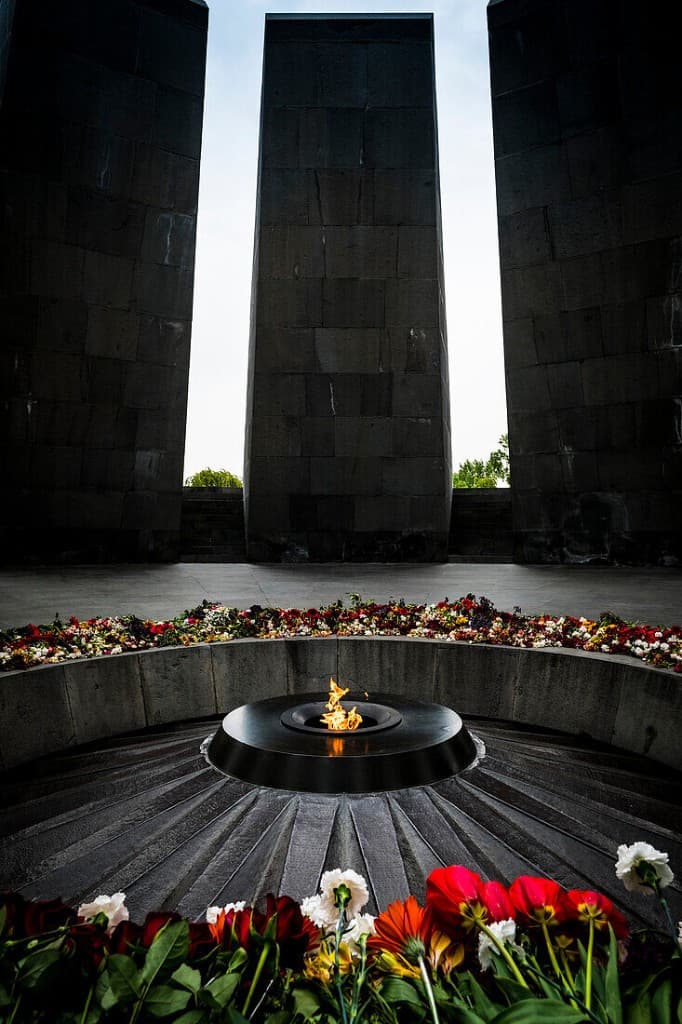
Recognition worldwide
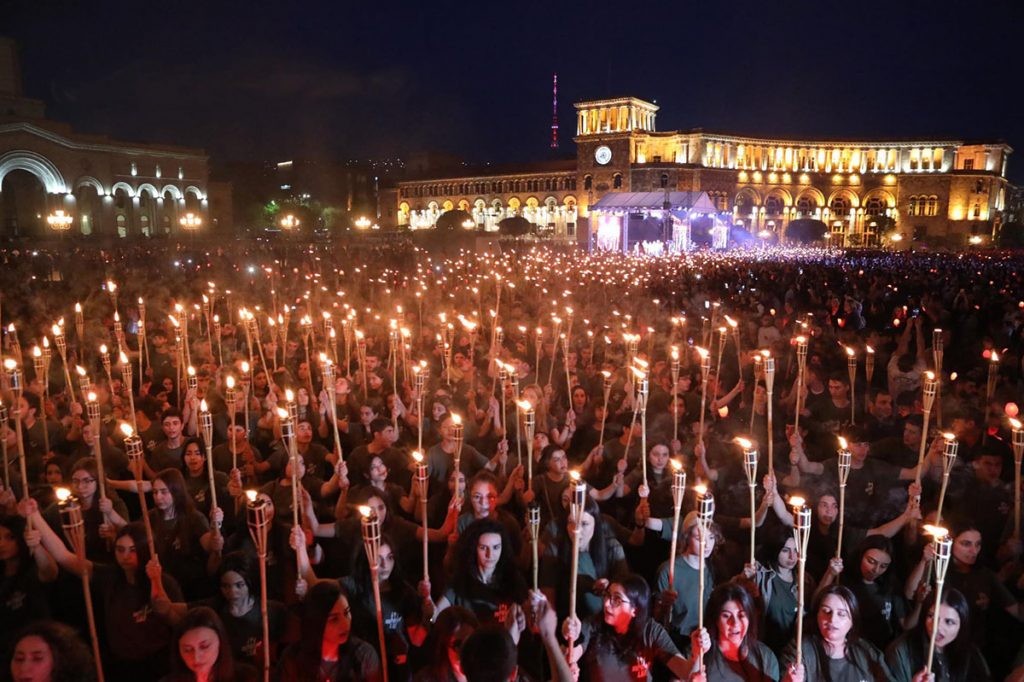
A twentieth-century tragedy
The term “Armenian Genocide” refers to Ottoman state policies and violence against the Armenian population, peaking in 1915. Mainstream scholarship documents mass deportations, deaths, and the destruction of communities.
Who, after all, speaks today of the annihilation of the Armenians?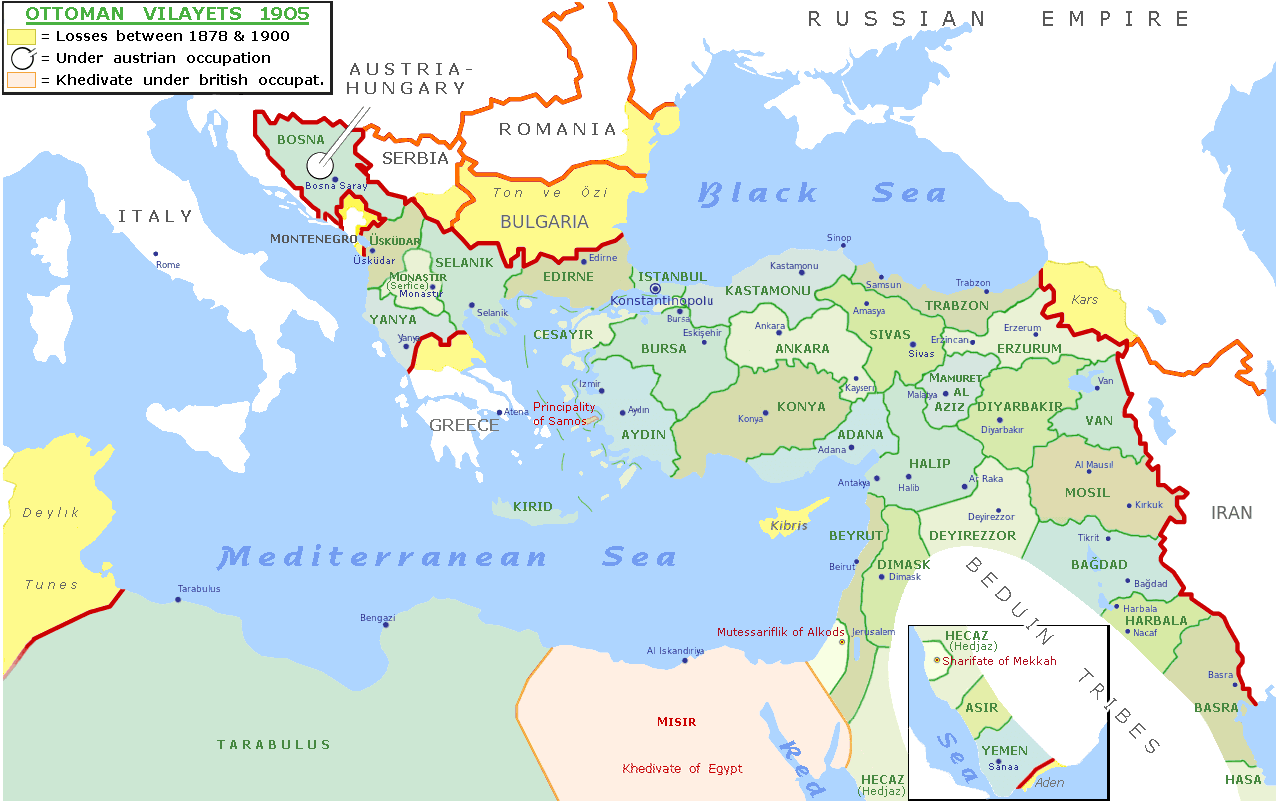

Key facts
Factual summary to guide reading. Figures are presented with scholarly caution; see What happened in 1915 and Resources to go deeper.
Timeline (1915–1923)
The core of mass deportations and deaths clusters in 1915–1916 during World War I. Consequences for the Armenian population extend through the Turkish War of Independence and the founding of the Republic of Turkey (1923).
Victims (orders of magnitude)
Scholarly estimates typically span a wide range—often several hundred thousand to more than a million—depending on sources and demographic methods. For public debate, the key point is the mass, directed character of the process.
Brief historical context
The Ottoman Empire, at war and under nationalist pressure, pursued policies that destroyed Armenian life across much of Anatolia. These were coordinated state decisions with systemic effects on a group later understood under modern genocide law.
International recognition
Many parliaments and governments have recognized the Armenian Genocide, broadly aligning with mainstream academic history. Wording differs, but the common thread is intentional destruction of the group as such.
Human impact
Between 1 and 1.5 million Armenians killed. In the same era, Ottoman campaigns also devastated Greek and Assyrian communities at mass scale—order-of-magnitude estimates often cite roughly one million Greeks and 750,000 Assyrians dead or uprooted (figures debated). Hundreds of thousands displaced. Thousands of villages destroyed. Anatolia’s demography was permanently altered and a global diaspora took shape.
Recognition around the world
Governments, parliaments, and international institutions have addressed the Armenian Genocide through laws, resolutions, commemorative statements, and educational texts. Our legal overview separates recognition from criminal anti-denial rules.
The illustrative tracker includes France, Switzerland (Perinçek at the ECtHR), the European Parliament, and other states. Always verify dated primary sources.
Open Recognition and lawsDenial laws
Some countries have enacted specific legislation on genocide denial.
France and Switzerland, among others, have introduced legal measures against genocide denial within broader frameworks of hate speech and historical memory law. These laws are not equivalent to political recognition: we distinguish both concepts in our analysis.
Open Recognition and lawsWho are Armenians?
Before approaching 1915 alone, many readers want basic context: who Armenians are, where Armenia is, why early Christianity and the alphabet matter, and how a global diaspora emerged.
The About Armenians page offers a museum-style introduction—ancient history, church, culture, diaspora, and Armenia today.
Go to About ArmeniansArmenians in Spain
Armenian communities in Spain are active in cities such as Madrid, Barcelona, Valencia, and Malaga. They organize public commemorations on April 24, cultural events, and church services — contributing to Spain's broader conversation on historical memory and human rights.
Church materials name cities including Madrid, Barcelona, Valencia, Alicante, Malaga, and Arnedo, and a parish project in Calonge. Read more on Armenia and Spain.
Open Armenia and SpainSelected resources
Real titles to start or go deeper; the full database is on Resources.
- Raymond Kévorkian — The Armenian Genocide: A Complete History.
- Ronald Grigor Suny — They Can Live in the Desert but Nowhere Else.
- Taner Akçam — The Young Turks’ Crime Against Humanity.
- Wolfgang Gust (ed.) — Evidence from the German Foreign Office Archives.
- Classroom guide: How to teach the Armenian Genocide in the classroom.
Three entry points
Each theme links to a dedicated page.
Facts and context
Chronology and documentation on the dedicated 1915 page—clear vocabulary, no sensationalism.
Why it matters now
How recognition connects with civic education, asylum policy, and European human-rights standards.
Spain and the diaspora
Why the topic appears in Spanish public debate and how associations and churches sustain memory.
Rigour and sources
How we approach accuracy and what “scholarly consensus” means in plain language.
This site is built for general readers, teachers, and journalists. It relies on mainstream academic history, diplomatic archives, and international human-rights standards—not on partisan slogans. Where historians still debate details, we say so clearly.
On the Armenian Genocide, the majority of peer-reviewed scholarship concludes that Ottoman state policy aimed to destroy the Armenian population as a group, which matches the legal definition of genocide developed after 1945. Minority interpretations exist; public debate should engage them with evidence, not insults.
We encourage you to compare our summaries with specialist books, museum materials, and university courses. Our Resources page lists entry points vetted for educational use.
Why it matters today
Recognition is not a closed chapter: it shapes truth-seeking, education, and foreign-policy language.
Memory and democratic coexistence
Societies that confront past violence with rigor tend to reinforce institutional trust. Acknowledging 1915 aligns with European commitments to mass-atrocity norms and minority protection today.
Read the full sectionSpain and recognition
Spain within the EU and wider European remembrance conversations.
Spain participates in forums linking Armenian Genocide memory to human-rights resolutions. Positions evolve—always check dated primary sources and subnational statements.
For community life, see Armenia and Spain.
Open Spain and recognitionNews and analysis
Long reads on recognition, teaching, and human rights.
- What historical recognition means in Europe
- How to teach the Armenian Genocide in the classroom
- Historical memory and human rights: a comparative perspective
- Memory and democracy in Spain
- Armenians in Spain: church, cities, and civic life
- Recognition vs. criminal denial laws (France, Switzerland, ECtHR)
- How public memory works in Europe
- Armenian language, manuscripts, and UNESCO